CHECK TO HAVE LINKS OPEN NEW WINDOWS

Loading...


Vox populi: "In building bridges across communites, this site supports the efforts of Beliefnet.com and religioustolerance.org." Says Seeker of Truth (Reviews & Testimonials) @ xomreviews.com
The Blog Content Map is helpful organizing diverse material/content. Codakiz

 
  Browse By Label: Blog Content Map
Map
  Blogging    Books    Business--Religious aspects    Diversity   
    You are here
      Cyber Worship       Faith and the Media    Golden Rule   Holidays and holy days     Inner-Net    Interfaith Dialog
      
Knowledge Management    Libraries and Librarians    Multicultural
    People Prayers    Religious accommodation    Seekers     Spiritual Audit
      Symbols    Theology    Tolerance    Web analytics    Women

Friday, May 13, 2011

An introduction to Islam for Jews - Reading now

An Introduction to Islam for Jews by Reuven Firestone @ amazon.com Philadelphia : JPS/Jewish Publication Society, 2008. 298 p. ISBN: 9780827608641.


What do the reviewers say:
  • Herbert E. Shapiro - Library Journal
    This well-written, scholarly book provides an overview of aspects of Islam that may be unfamiliar yet of interest to contemporary Jews.
  • AJL Newsletter - Rachel Simon
    This authoritative and readable book is of value for students and general readers alike.
  • Midwest Book Review
    An Introduction to Islam for Jews is perfect for any Jewish reader seeking an understanding of Islam... a scholarly yet accessible title.
  • Publishers Weekly
    Firestone extends a real effort to be fair to both sides; in his discussion of Muhammad's massacre of between 600 and 900 Jewish men, for instance, he reminds readers that the Jews had committed treason and points to examples in the Hebrew Bible where Israelites engaged in similar tactics. Part two digs into the foundations of Islamic law and belief, discussing the Qur'an, the prophetic tradition, key doctrines and sharia law.

    About the Author:
    Reuven Firestone is professor of Medieval Judaism and Islam at Hebrew Union College in Los Angeles and director of the Institute for the Study and Enhancement of Muslim-Jewish Interrelations (ISEMJI), a program of the Center for Religion and Civic Culture at the University of Southern California

    On the same shelf:
  • Did the Jews pray as Muslims do ?
  • CHRISTIANS AND JEWS ALSO PERFORM THE PRAYER (SALAT), SCIENCE-ISLAM
  • Do the Jews ever pray like the Muslims?
  • Prostration
  • Sunday, May 08, 2011

    Faithwise Review of the Week


    • Messenger Muhammad Asks: Hey Osama.. Why Did You Kill? by Seckin Islamoglu
      A survey about Islam, Muslim, Muhammad (sav), Jihad and Terrorism This book answers these basic questions: "What is Islam? Who is Muhammad (sav)? Who is called a Muslim? What is Islamic Struggle (Jihad)? Is Terrorism an Islamic method? Can those who apply non-Islamic methods be representatives of Islam and Muslims? Can one reach success and get Allah's consent with non-Islamic methods?" It tells the differences between Jihad (Islamic methods of struggle) and Terrorism (evil methods of struggle). It is an invitation to repentance for the cruel who use both individual (organizational) terrorism and state terrorism. And at the same time, it introduces the illuminating profile of the exemplifying life of Muhammad (sav); it is for those who seek the truth.
    • Osama Bin Laden Killed By U.S. Forces-Dallas Morning News Newspaper, Monday May 2, 2011, New, unread newstand copy.
    • Sustainable Peterborough (Ontario): United in Faith [An evening with Sustainable Peterborough, visioning our future through the eyes of faith. Share your ideas and hopes as input to the Greater Peterborough Area's Sustainability Plan.
      Wed. May 18, 7-9 p.m., George Street United Church auditorium, 534 George St. N. ]
    • Is bin Laden Really Dead? Osama Bin Laden Death Skeptics Grow As Lynne Blankenbeker, New Hampshire State Rep, Voices Doubts
    • Hasidic Newspaper Photoshops Hillary Clinton Out Of Iconic Picture

    • World to end May 24 weekend: kook or prophet By Mark Dunn, Parliamentary Bureau, Toronto Sun

    • Halevi: The burial at sea and the history of Shariah. [Watery Grave, Murky LawBy LEOR HALEVI]

    • End of Mideast Wholesale, By THOMAS L. FRIEDMAN

    • Know thy neighbours, Eboo Patel and Samantha Kirby, Hindustan Times [What can we make of this? Rev. Jim Wallis, a leading progressive evangelical voice in America, has a saying: “God is personal, but never private.” By imagining religion only as a private affair, we ignore the important public elements of faith — whether it means garnering strength from prayer during times of chaos or living out religious convictions by protecting others so they can practise freely]

    • Putting Multifaith Education at top of the Agenda: Henry Luce Foundation Awards $350,000 Grant to Episcopal Divinity School

    • Om shanti om! Deccan Chronicle
      Extract:
      According to the Vedas, the universe was created with the word “Om” and today, it is a proven fact that the beej mantra of Hinduism has several benefits for the body and the soul.

      Chanting “Om” stimulates the central nervous system, giving relief from mental health issues including depression, anxiety and even epilepsy. The mantra has the potential to work on the Vagus nerve, stimulating the brain through its auricular branches. The Vagus nerve is one of the 12 pairs of cranial nerves and extends from the brain to the abdomen.

      A team of researchers from the psychiatry department of the Advanced Centre for Yoga, attached to the National Institute of Mental Health and Neurosciences, Bengaluru, has concluded that the “Om” mantra has neurohaemodynamic potential i.e. improves blood flow to the brain, thus increasing brain function and that of the central nervous system.

      Dr B.N. Gangadhar, one of the researchers, told this correspondent that stimulation of the Vagus nerve is used to treat depression and epilepsy. Since chanting the mantra stimulates the Vagus nerve, it can have a potential role in clinical practice.
  • Swimwear firm apologises for carrying Goddess images on bikini Deccan Chronicle
    Extract: An Australian swimwear label company, which triggered a controversy by depicting an image of Goddess Lakshmi on a bikini bottom and front of a model, has apologised to the Hindu community for hurting their sentiments.

    "We would like to offer an apology to anyone we may have offended and advise that the image of Goddess Lakshmi will not appear on any piece of Lisa Blue swimwear for the new season, with a halt put on all production of the new range and pieces shown on the runway removed," said a statement issued by the Lisa Blue Swimwear.
  • Sunday, April 24, 2011

    Godmen of India again in news headlines

  • Hindu holy man dies: Sathya Sai Baba had millions of followers, cbc.ca The Associated Press, Apr 24, 2011
    Born Nov. 23, 1926, in Puttaparti, the guru was first named Sathyanarayana Raju.

    In 1940, he declared himself an "avatar," or reincarnation, of another Hindu holy man called the Sai Baba of Shirdi, a town in the western Indian state of Maharashtra who had died in 1918.

  • Bhagwan Satya Sai: Faith Marginalizes Reason, Ram Puniyani, Communalism Watch, April 27, 2011


  • Sai Baba: Guru who didn't dabble in politics, TNN | Apr 25, 2011,
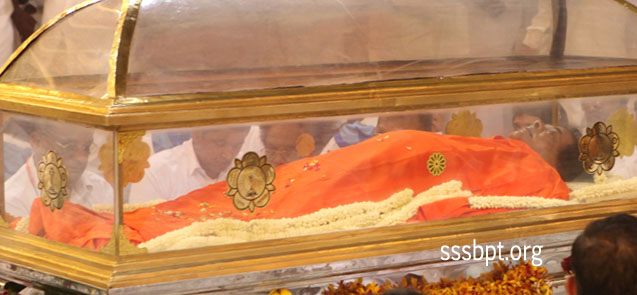
    SPIRITUAL JOURNEY:The mortal remains of Sri Sathya Sai Baba kept in the Sai Kulwant Hall in Prashanthi Nilayam at Puttaparthi on Sunday. The body will be kept in this huge and ornately decorated hall on Monday and Tuesday for devotees to pay their final respects, before being interred there on Wednesday Morning
  • A chequered spiritual-philanthropic journey, S. Nagesh Kumar, The Hindu, Apr 25, 2011
    HYDERABAD: Sri Sathya Sai Baba, the spiritual guru who passed away at Puttaparthi on Sunday morning, enjoyed a large following in India and abroad that cut across religious and national boundaries.
    Sathya Sai Baba 'Dead body'
  • Corruption, Religion And God-men, Central Chronicle - 8 Apr 2011
  • Sathya Sai Baba’s death – no miracles Robert C Priddy
  • Baba said he would return stronger

  • No govt interference in Sai Trust: Baba Ramdev

  • Swamis, Celibacy And Sex Scandals. By Ram Puniyani. 21 March, 2010
  • Sathya Sai Baba Deceptions Exposed, Robert C Priddy
  • Miracles by 'Godman' just simple tricks, Montreal Gazette - Joe Schwarcz - 16 Apr 2011
  • Baba Ramdev: Yogi or Commissar? | TwoCircles.net By Ram Puniyani

  • Sex scandals: a bad week for India's 'godmen'
  • The lust for a man-made god, Ha'aretz - Yaakov Meir

  • Vamps and margins talk back Nisha Susan
  • Is Anna Hazare the new Gandhi? by Asghar Ali Engineer
  • Anna Hazare's Campaign: truly Gandhian, truly evil, Radha Rajan
  • E=mc^2: Why Anna Hazare will fail!
  • Anna Hazare Movement: Its' Project Brahmanism! By Goldy M. George
  • Modi Godman sex scandal
  • Of Ali Baba, Yahoo Baba and Forty Thieves: Sid Harth
  • India's God Krishna Was the King of Jerusalem | Krishna.com
  • SAIBABA AND OTHER GODMEN by asghar ali engineer
    Extract: A real religious person is not builder of empire but subvert it. Whosoever built empire failed in spiritual sense and whosoever subverted established empires became great.
  • Blah Blah Ramdev and India's love for nonsense Raheel Khursheed
  • Guru or seth? Business Standard, Jun 19, 2011
    Right on top of Swami Ramdev’s hate list are corrupt politicians (hang them, he says), followed by homosexuals (cure them, it’s a disease) and multinational corporations (drive them out of our pious land). Manipulative multinationals, says the yoga guru and crusader, suck out more money than they bring in, and take jobs away from local artisans and craftsmen. In his utopian scheme of things, there is no role for multinationals — the Rs 300,000 crore worth of black money stashed abroad is back in the country to run its power plants, build roads and reach water to the fields; people do an honest day’s work, after an hour or two of Yoga in the morning, and read religious texts before they hit the bed... continue reading
  • Baba Ramdev and Sathya Sai Baba – The Saffron Criminals? By Sai Arjun, The Chakra News

    On the same shelf:


  • Wednesday, March 16, 2011

    Taxes: Buddhism and Fiscal Policy

    Birth, Old Age, Sickness, and Taxes: Buddhism and Fiscal Policy, State of Formation
    Extract:
    So, Asvaghosa equates excessive taxation with more personal transgressions, especially theft; Surata objects to the covetousness that high taxes inflict on a king and the financial pain they inflict on the citizenry; and, Nagarjuna objects to the financial and emotional pain that the undue hardship of high taxes cause. The renowned Nyingma Buddhist philosopher and teacher Jü Mipham Gyatso (1846-1912, Derge, eastern Tibet) nicely sums up all of these sentiments in his Advice on the Way of the King, saying,

    Forcefully taking a reasonable tax from the wealthy,
    even when they haven't offered it,
    is like being compensated.
    This is not “taking what hasn't been given.”

    Forcefully taking from the poor
    can be either a wrongdoing or not a wrongdoing:
    In order to prevent gamblers and prostitutes
    from wasting the wealth obtained illicitly,
    if you take from them, it is said to benefit both
    and is not a wrong-doing.
    When someone has lost property through fire, etc.,
    tax them lightly.

    If one doesn't care for the sentient beings
    who haven't any means, this is a wrong-doing.

    Later, he reiterates,

    If one doesn't collect taxes which are reasonable,
    and not take equally from the rich and poor
    according to their situation, is that just?
    From all subjects who pay taxes
    take in accord with their land,
    the season, and their wealth, without harming their home.
    Do not burden them unbearably.
    In the manner of a cow eating grass
    On the same shelf:

    Tuesday, March 15, 2011

    What a Rabbi Learns from Muhammad: IslamiCity

    By: Rabbi Allen S. Maller
    IslamiCity

    Extract:
    I first studied Islam when I was a student at UCLA almost 50 years ago, Then again while I was in Rabbinical school. Over the years I continued to read the Qur'an and other Islamic books. I read these books as the Prophet taught his followers in a Hadith "not as a believer, and not as a disbeliever". What does that mean? ...

    ...I would like to begin by sharing my understanding of several Ahadith that have taught me about my own religion. My understanding is reflected in my application (gloss) of each insight from my perspective as a Liberal/Reform Rabbi.

    ...Most Americans that I have spoken are amazed to hear such liberal and flexible statements coming from a religion that they think is ridged and fanatical.

    ...Nevertheless as a Reform Rabbi, I realize that in many ways Muhammad showed seventh century Jews in Arabia how to reform Orthodox Judaism to bring it back to the simpler rules of the Torah.. continue reading: What a Rabbi Learns from Muhammad @ IslamiCity* -

    On the same shelf:
  • A Reform Rabbi Learns from Muhammad, By Rabbi Allen S. Maller, in The Fountain Magazine, March - April 2008: Issue 62.
  • Understanding Islam: The First Ten Steps [Written by a Fellow in Christian-Muslim Relations]
  • Do I Kneel or Do I Bow?
  • Did the Jews pray as Muslims do ?!
  • Tuesday, March 08, 2011

    Cyber Worship Revisited - Need to sort out your sins? There's an app for that

    Herald Tribune, Thu 10 Feb 2011

    Can your iPad or iPhone bring you closer to God? A new application for the devices aims to help Roman Catholics who haven't been to the confessional booth in a while keep track of their sins, one Commandment at a time. The $1.99 "Confession: A Roman Catholic App" can't grant forgiveness -- you still need to receive the sacrament from a real, live priest like always. The app's designers and some believers see it as a way to spur Catholics back into the habit of repenting. "There's a reason we designed it for these mobile devices: We want you to go to confession," said Patrick Leinen, one of the developers and a co-founder of the company Little... continue reading: Herald Tribune,


    More Online Confessions, Resources here:

    Here is a sample from inside the Book: Cyber Worship in Multifaith Perspectives--full of resources that will facilitate building bridges in a Multifaith society. Table of Contents / Reviews

    Chapter 2. 'Cyber Worship as-is On the Web'

    Resource of the Week is: Museums of World Religions (see description, reviews, etc., page 70). Order with Publisher:Order from Publisher

    My related posts:
  • Special Issue from Religious Studies Review on Religion & Internet
  • Cybersins and Digital Good Deeds
  • Christian Librarianship
  • Web Vastu or A Spiritual Worldview for Marketing Website
  • Online - Heidelberg Journal of Religions on the Internet
  • Cyber Worship in Multifaith Perspectives
  • Related Posts with Thumbnails

    PostRank


    Google
    Web multifaith.blogspot.com